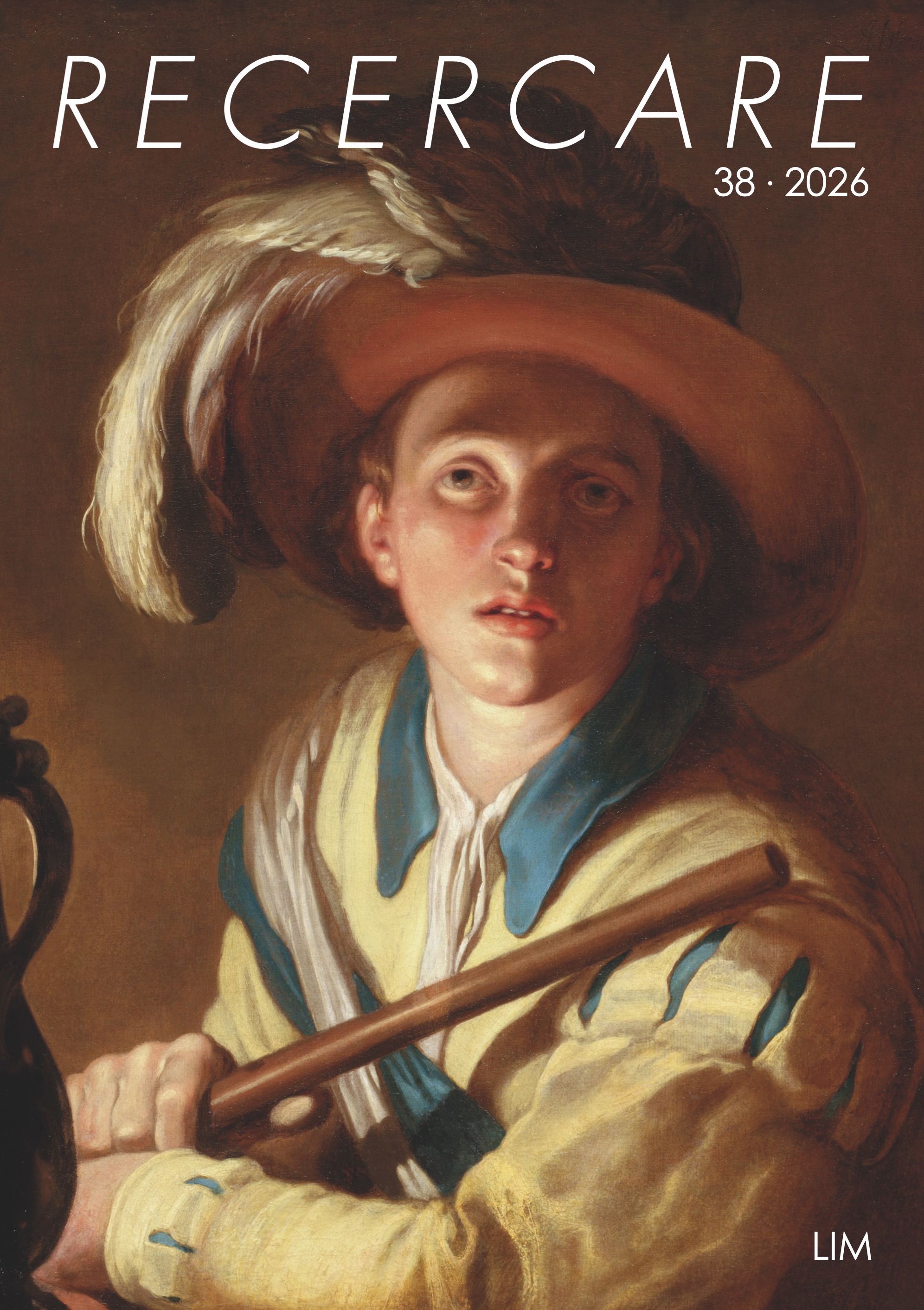
«Le novità non sogliono dispiacere»
I flauti a Roma all’epoca di Corelli
Abstract
The article deals with the role of flutes in orchestral practice in Rome between the late seventeenth and early eighteenth centuries, a research topic traditionally linked to studies on Arcangelo Corelli and the context in which he worked as a violinist, concertmaster, and conductor. This period appears to be characterized by a marked increase in the number of instrumentalists in orchestras as well as by the progressive introduction of wind instruments, influenced by French music. In this context, the significant, yet still underexplored presence of flutes emerges from musical and documentary sources. Through a systematic examination of scores, archival, and iconographic sources, dating roughly between 1687 and 1714, the article pursues three objectives: 1. to gather evidences on flutes and flutists from scores and archival documents; 2. to clarify the typologies of flutes, both recorder and transverse, indicated in scores and their terminology; 3. to highlight some peculiarities of the musical writing of the pieces concerted with flutes, such as tonality, timbre and range, also in relation to the sung text.
The article highlights lesser-known aspects of the history of the flute and the evolution of the timbric palette in Corelli’s time, and contributes, therefore, to improving the knowledge of orchestration in Rome between the seventeenth and eighteenth centuries. The article highlights some lesser-known aspects of the history of the flute and the evolution of the timbric palette during Corelli’s age, and contributes to a better understanding of orchestral practice in Rome between the seventeenth and eighteenth centuries.
https://www.lim.it/it/recercare/7102-recercare-38-2026-9788855435260.html#/2-tipo_prodotto-libro